Bybit Options Weekly Review: Jul 21–Jul 27
AI Summary
Show More
Quickly grasp the article's content and gauge market sentiment in just 30 seconds!
TL;DR
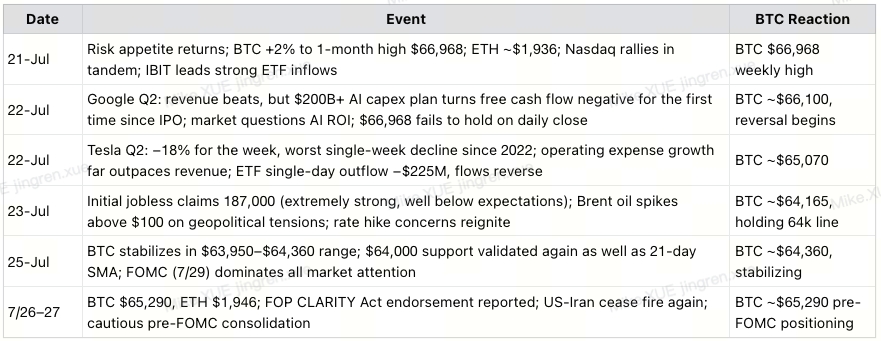
BTC peaked at $66,968 on Monday (7/21), then slid for three consecutive sessions back to the $65,000 zone, closing the week at ~$65,290 (+0.9%); the high aligned precisely with the Two-B structure's key validation level at $66,400–$67,000, but failed to hold on a daily close
ETH continued to outperform, now at ~$1,946 (+4.6%); the W-bottom neckline at $1,800 was never threatened
DVOL: ETH 51%, BTC 36% — ETH seller advantage persists;
Last week's ETH Put Seller delivered in full; continuing ETH Put Seller this week, strike $1,750–$1,800, reduce to 40–50% sizing ahead of FOMC
I. Weekly Market Recap
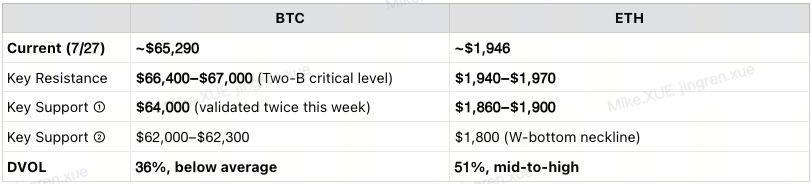
Price Action (Bybit Platform Data, July 21–27):

Event Timeline:
II. Technical Analysis
2.1 BTC:
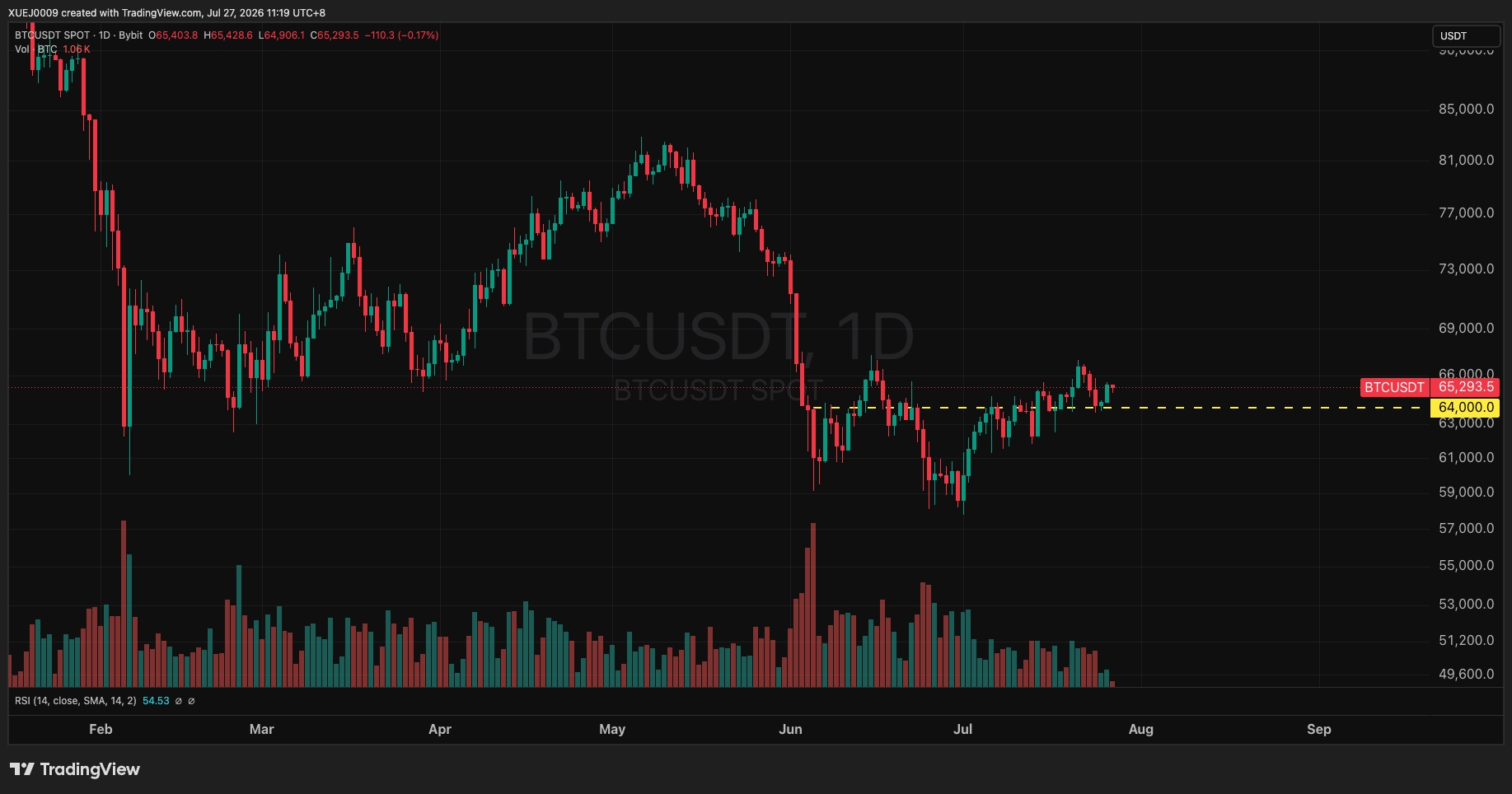
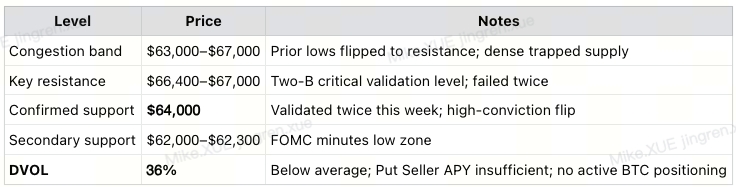
The $63,000–$67,000 range is a heavily congested resistance band. This zone corresponds exactly to BTC's base-building area from February through April 2026 — what was support then has entirely flipped to resistance now. Prior lows becoming resistance means the zone is packed with trapped buyers who need to exit near their cost basis, creating persistent overhead supply. Digesting this takes time; there is no shortcut.
Two failed attempts at $67,000, both on declining volume: The most recent push (July 21, $66,968) saw meaningfully lower volume than the prior attempt — a clear volume-price divergence warning. With capital continuing to rotate from crypto into other asset classes, overall trading volume remains thin, further undermining the momentum needed for a sustained breakout.
BTC technical summary:
2.2 ETH:
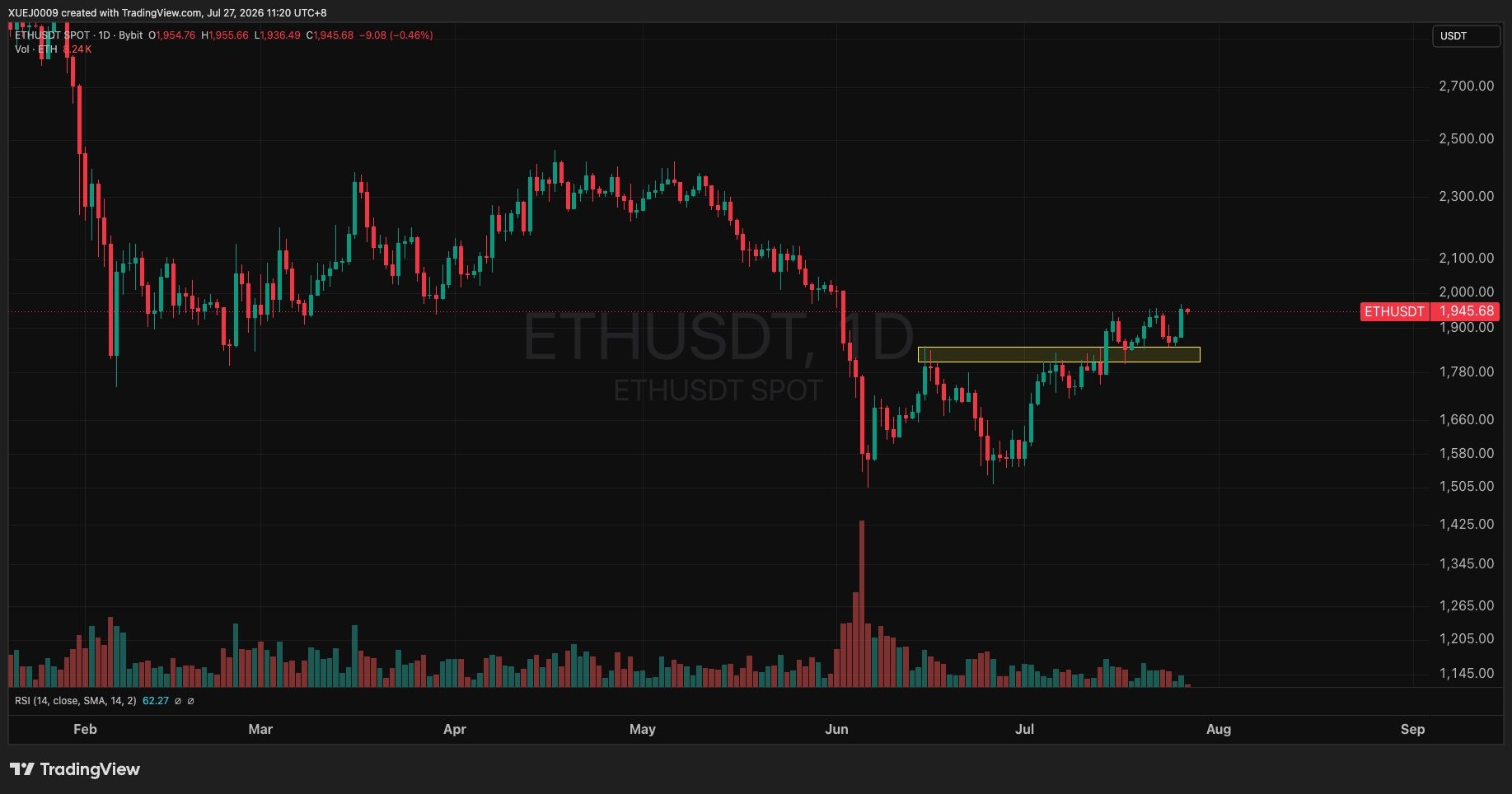
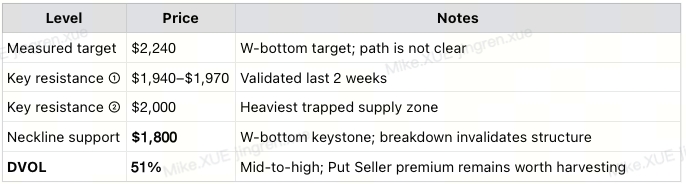
ETH's structural advantage over BTC remains clear: ETH has already broken above the W-bottom neckline ($1,800), pulled back to retest it last week, found support, and pushed back above. The measured target of $2,240 remains technically intact.
But ETH is now facing resistance in the $1,940–$1,970 zone — the same support-to-resistance flip dynamic seen in BTC. This zone was prior support; it now needs time to work through the trapped supply before a sustainable push higher becomes possible.
The shared problem for both BTC and ETH: volume-price divergence. Neither asset's recovery has been accompanied by a matching expansion in volume. Without volume confirming the move, momentum is structurally weak. The technical path forward has exactly two branches:

ETH's structure is modestly better than BTC's — neckline already broken, DVOL at 51% vs BTC's 36% — but one important caveat applies: we are still in a bear market structure. Every technical pattern carries the possibility of failure, and price targets should be discounted accordingly.
ETH technical summary:
III. Macro Background:
3.1 Tech Earnings — Two Opposing Signals
Tesla (−18% for the week) — worst weekly decline since 2022: Operating expense growth materially outpaced revenue growth; earnings missed. As a real-time barometer of risk appetite, Tesla's collapse had a measurable negative ripple across broader risk sentiment.
Google (AI capex $200B+) — free cash flow goes negative for the first time since IPO: Revenue met or beat across business lines, but the $200B+ AI capital expenditure plan flipped free cash flow negative, raising deep questions about AI capex returns on investment timelines.
Together, these two prints send the same macro message: the AI capex wave is starting to erode conventional profitability metrics — AI is not just a growth narrative, it is also an inflation input, directly consistent with the FOMC minutes' framing of "AI capex as a structural inflation driver."
3.2 Initial Jobless Claims at 187k — Rate Hike Concerns Reignite
Initial jobless claims came in at 187,000, well below expectations, signaling a resilient = labor market. Combined with Brent oil's spike to $100/bbl on geopolitical tensions (though Brent has moderated back below $90/bbl at the time of writing), rate hike fears that were briefly suppressed by the CPI data have returned — this is the macro reason BTC could not sustain gains above $66,968 and consolidates at $65,290.
3.3 Geopolitics: 3 Nights Without US Strikes Since Latest Flare-Up — Oil Pulls Back, But No Ceasefire
On July 25, the US military did not announce new Iran strikes for the first time in two weeks. Brent crude fell 4% to $96.78, WTI dropped 3% to $89.31 — contributing to BTC's relative stabilization into the weekend.
Despite the lull that has stretched into 3 nights as of Monday, July 27th, the situation remains unresolved at the time of writing.
A new mediator ceasefire proposal would halt fighting and reopen the Strait of Hormuz, but neither Trump nor Iran has accepted it. The Houthis simultaneously declared a maritime blockade on Saudi ports, opening a new energy infrastructure front.
Oil pulling back from $87+ reduces near-term CPI transmission risk — but the Strait has not fully reopened, no formal ceasefire is in place, and the Houthi front is still nascent.
IV. FOMC Alert:
CME FedWatch latest data:
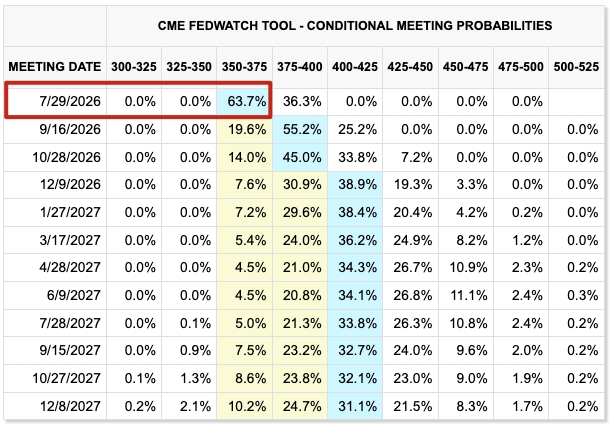
The July 29 hold is already priced at 63.7% — a surprise hike is extremely unlikely, and the meeting is expected to pass without incident. But September hike probability has risen to approximately 80% — the real event is not the July decision itself, but every word Warsh says at the press conference.
Few things to watch at the press conference:
How does Warsh characterize the September decision? Any explicit signal toward a September hike will pressure BTC; deliberate avoidance could provide brief relief.
Does inflation language escalate? Any shift from "may" to "likely" in describing inflation risks will be immediately repriced by markets.
V. Last Week's Strategy Review: ETH Put Seller Delivered Again

VI. Outlook for Next Week (July 28 – August 3)
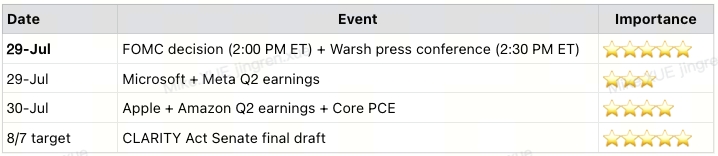
Next week's key calendar:
FOMC three scenarios:
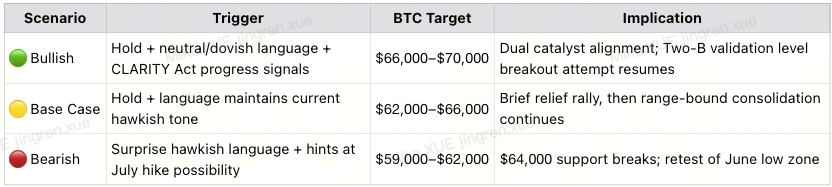
VII. This Week's Strategy: ETH Near-Dated Put Seller, Reduce Into FOMC
The market has fully priced a July 29 hold (63.7% probability) — a surprise hike is extremely unlikely, and the meeting is expected to pass smoothly. Against this backdrop, we continue the ETH Put Seller strategy and harvest implied vol premium.
ETH DVOL 51% vs BTC DVOL 36% — the gap has widened further. ETH's seller advantage is more pronounced than at any point in recent weeks, and remains the core quantitative justification for running ETH rather than BTC as the primary vehicle.
Trade parameters:
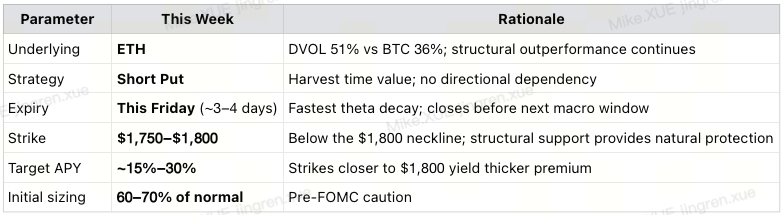
Reduce into FOMC — the most important discipline of the week:
Before the FOMC rate decision and policy statement are released (July 29, 2:00 PM ET), traders may be wise to actively reduce exposure to 40–50% of normal sizing.
The reasoning:
The market has priced a hold, but Warsh's language is entirely unpredictable — any hawkish signal on the September rate decision could trigger a sharp short-term move in ETH
September hike probability is already ~80%; if Warsh explicitly signals that path, ETH could quickly test the $1,800 neckline
Protecting the position from being hit by unexpected Fed language is worth more than collecting the last increment of premium
Stop discipline:
ETH daily close below $1,800 neckline → close immediately, do not hold to expiry
ETH single-day move exceeding 5% during FOMC window → reassess all open positions
⚠️ This strategy is for informational purposes only and does not constitute financial advice. Actual strikes, premiums, and risk exposure depend on live IV at time of entry. |
Weekly Summary:
BTC precisely tagged the Two-B validation level at $66,968 then retreated, now at $65,290; 63,000–$67,000 band is a dense congestion zone of prior lows flipped to resistance; two failed breakout attempts, both on declining volume — the time cost of digestion cannot be skipped. BTC DVOL at 36% offers insufficient seller yield; no active BTC positioning.
ETH modestly better than BTC: neckline $1,800 broken and holding, now trading at $1,946; measured target $2,240; 1,940–$1,970 resistance needs digesting, and volume-price divergence is the shared problem for both assets — no sustained trend without volume confirmation.
FOMC: July 29 hold at 63.7%, September hike probability ~80%. The July decision (no change) is all but a foregone conclusion; Warsh's every sentence is signal. Watch for how he characterizes the September decision, whether inflation language escalates, and whether he again refuses the dot plot.
This week: ETH Put Seller at $1,750–$1,800, reduce to 40–50% of normal sizing ahead of FOMC. ETH DVOL 51% provides ample premium; Warsh's language can move markets in minutes — discipline always comes before yield.