The Role of Short-term Sentiment in Trading
AI Summary
Show More
Quickly grasp the article's content and gauge market sentiment in just 30 seconds!
Introduction: Why sentiment is a key factor in trading
Price movements aren’t just about indicators like the RSI, MACD, or candle stick patterns, they’re also driven by human emotion. When traders become extremely optimistic, they tend to buy aggressively, often pushing prices higher in a short period. However, once this excitement fades, the market frequently corrects. Similarly, on the other extreme, when fear takes over and sentiment turns extremely negative, most short-term traders are sidelined. They are too scared to enter the markets. Ironically, this is often when markets start recovering. There is a very simple market mechanic at work here — when traders are afraid they sell, leaving more money on the sidelines to potentially enter the markets again. When traders are too optimistic, most money has been positioned, leaving the market with more potential sellers.
By understanding these emotional cycles, traders can avoid reacting on emotions like FOMO (fear of missing out) and panic selling, leading to better decision-making. Instead of reacting in an emotional way to the markets, traders try to understand the sentiment and use it to their advantage.
The psychology behind market sentiment
The market sentiment is essentially the collective mood of traders at any given time. This mood is shaped by a variety of factors, including news, price action and social media. Here’s how it typically plays out:
Extreme Optimism → Market Peak: When everyone is bullish and buying aggressively, it means most traders have already entered positions, reducing the number of new buyers left to push prices higher. This often precedes a pullback or correction.
Extreme Fear → Market Bottom: When traders are overly pessimistic and selling in panic, it usually means the market has flushed out weak hands. With fewer sellers left, prices often start to recover.
This cycle repeats itself over and over again in different timeframes. Recognising it early can prevent traders from buying the top or selling the bottom. Let’s have a look at the fear and greed indicator.
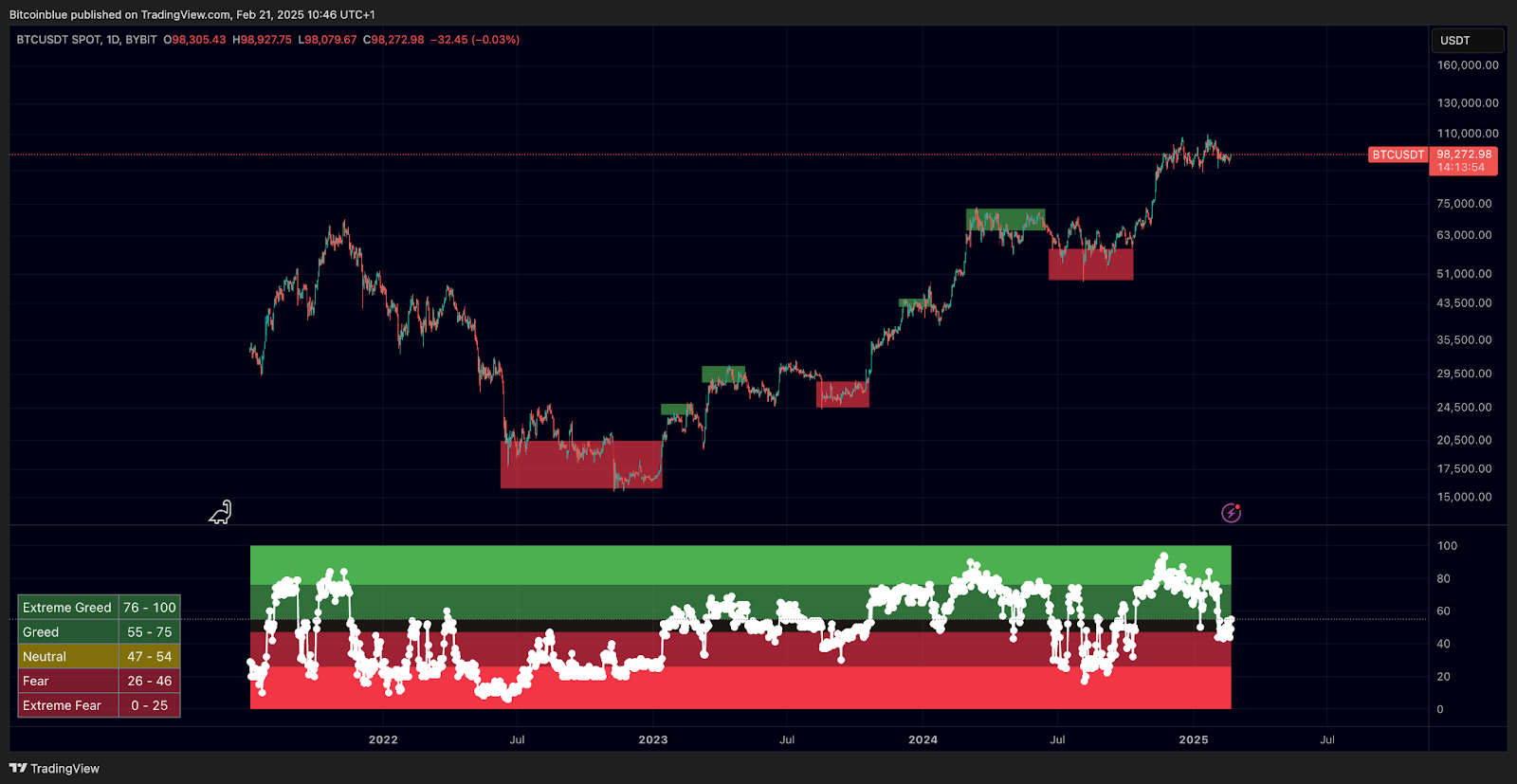
In the chart above you can see the BTCUSDT chart with the Crypto fear and Greed Indicator. Generally when the sentiment is overly negative, price tends to go up and when the sentiment becomes overly positive, price needs to cool down.
How to identify short-term sentiment shifts
While long-term sentiment indicators like the Fear & Greed Index provide a broad market outlook, short-term sentiment can be very useful too. Here are some of the best ways to spot sentiment shifts in real time:
1. Social Media & News Trends
A quick way to assess sentiment is by analyzing content on Twitter, YouTube and crypto news platforms:
If everyone is talking about a coin “going to the moon”, it often signals that retail traders have already entered, increasing the risk of a correction.
When bearish sentiment dominates and content creators are predicting a market crash, it may indicate a potential buying opportunity.
2. Funding Rates & Liquidation Data
Excessive long positions (high positive funding rates) indicate traders are too bullish, making the market vulnerable to a pullback.
Large liquidations in one direction suggest that weak hands have been flushed out, increasing the likelihood of a reversal.
You can utilize tools such as Sentiment Heatmaps or Liquidation data available on Coinglass.
How Bybit traders can use sentiment to stay rational
Sentiment should never be the sole factor in making trading decisions, but it can serve as a confirmation tool. Here’s how Bybit traders can use it to their advantage:
When sentiment is euphoric, consider taking partial profits or tightening stop-losses instead of blindly buying in.
When sentiment is extremely fearful, it might be time to look for entry points, as markets often rebound when most traders expect further downside.
Combining sentiment analysis with technical indicators like support/resistance and volume can increase the probability of making successful trades.
Conclusion
The sentiment is often overlooked by traders. However, it is still an important metric to include in one's analysis, not just to get better entries and exits but to avoid mistakes. It can give traders a clear edge as many market participants are often stuck in the emotional state of the markets.
This article does not provide financial advice in any way, shape, or form. It is intended solely for educational purposes and should not be construed as a recommendation to buy, sell, or invest in any financial products or services. The information presented is for general knowledge only and does not account for individual circumstances, risk tolerance, or financial goals. Always conduct your own research and due diligence.
#LearnWithBybit